Welcome to Your (Virtual) Neighborhood

A few months ago, I stopped by a Vancouver-area urbanist meetup focused on how planning professionals communicate their plans to the public. Sitting among a group of smart young urbanists, we considered a central question: “How would Steve Jobs communicate a plan?”

It’s an obvious answer, but also obviously true: he’d use innovative and elegant technology to give people a totally new experience. The only question is: what technology will drive the next big approach to visualizing urban futures? We chatted and speculated about what kinds of technology would drive this process: crowdsourcing design? Easy 3D modeling? Augmented reality apps? I walked away from the exercise with a head full of exciting ideas, but also with the lingering impression that the technology to accomplish this would remain out of a cash-strapped city’s reach for many years to come.

So, I was pleasantly surprised to learn about two innovative pieces of hardware announced this year–the Oculus Rift and the Structure Sensor–that suggest the capacity to upgrade how we communicate design could arrive much sooner. With affordable tools to sense and record the existing environment in three dimensions, model proposals with CAD software and insert it into the sensed built environment, and let people explore their city or neighborhood with immersive virtual reality. If this isn’t the holy grail of urban design visualization, it’s at least getting close.

The first step to illustrating how a development proposal will impact an urban space is to understand its context–the topography of the land, the buildings and vegetation that frame the parcel, the public and private spaces around it, the views that it impacts, and the shadows it casts. Tools like crowdsourced building models embedded in Google Earth provide a start at a 3D spatial representation of these tools, but lack the fine details and accuracy to provide a ground-level experience of the built environment. This is where 3D scanning technology like the Structure Sensor comes in: attach the device to an iPad, and you have a tool that can create accurate digital models of the spaces around it. Cheap 3D scanning will allow planners, designers, and architects to create and maintain databases of the physical structure of a city’s streets, buildings, and public spaces.

With that data on hand, planners and stakeholders will gain the ability to model proposed changes in density or comparing the results of different form-based codes in the context of existing built form without big budgets for design and visualization. This is a big step in and of itself–with these tools on hand, planners could show the public different planning scenarios at a much more fine-grained and true-to-life perspective than simply showing different massing diagrams from a bird’s eye view.

The technology that could take these tools farther to deliver an unprecedented degree of immersiveness and realistic experience of urban design visioning is the arrival of practical and affordable virtual reality hardware, like the Oculus Rift. Originally targeted at game developers, the Rift has already been adopted by architectural technology firm Arch Virtual to provide architectural clients with a virtual rendering of a proposed building that can be explored in first-person 3D. They’ve even rendered portions of downtown Dubuque, Iowa as a demonstration of how planners might use the Oculus Rift to engage with urban space.

If the capabilities this technology presents sound like science fiction to you, you’re not alone–but 3D scanning, modeling, and virtual reality visualization may in fact present the most natural and intuitive way for everyone from designers to the public to experience and understanding changes in the fabric of our cities.

Given how much potential this approach has to enhance the dialogue we can have about the future of urban development, the costs are almost unbelievably low. The Oculus Rift is slated to be released for $300, while developer Occipital is offering Kickstarter backers the device for as little as $359. This means that this technology isn’t just for deep-pocketed developers to show off penthouse condos–as the tools to smoothly translate sensed data to navigable worlds improves, planners and advocates will be able to put these tools to use in recording, exploring, and rebuilding virtual simulations of the spaces they plan.

The future of public participation? (source: news.cnet.com)

We’ll undoubtedly see these technologies put to work in other creative ways in the urban domain. We’ll likely see the proliferation of services like CityScan that use 3D scanning technologies to assist with functions like code enforcement. Spatial databases of cities around the world could allow urban designers to tap into an unprecedented treasure trove of precedents for laying out streetscapes and public spaces. And imagine showing a house or apartment with an Oculus Rift in every home: just scan the space, post the data online, and interested buyers or renters could put on their headsets and get a complete tour.
90 by 50: A Few Thoughts

New York City’s Urban Green Council has released a report, 90 by 50, that charts a path towards a 90% reduction in municipal greenhouse gas emissions by 2050–and does it with technologies that are available today and without requiring massive behavioral change. Slate provides a detailed review here, but I’ll add on a few thoughts on this ambitious roadmap.

  • The plan’s biggest target is building energy usage, which is a tough nut to crack: as Slate puts it, “Inefficient buildings are much harder to replace than inefficient cars.” However, a citywide program of gradual retrofits–individual and district geothermal heat pumps, triple-glazed windows and better insulation–is projected to drastically cut GHG emissions and energy requirements in the long term. However, given that property owners tend to be risk-averse and have higher-than-normal discount rates and payback requirements for efficiency measures, this seems to require either strong regulations for building upkeep and retrofit, or some kind of reworking of utility serving to include not just energy but energy efficiency measures as a combined service.
  • One of the few individual-level sacrifices the plan calls for is curtailing the use of glass curtain walls. As the UGC’s Dick Leigh remarks, “People want buildings with huge expanses of glass. But no matter how good the glass is, it’s not going to be as good as an insulated wall.” While Leigh is technically correct, I wonder if this isn’t a misguided stand–sweeping views and better natural light are real amenities, and ones that make small high-rise units more livable. New Yorkers generally seem willing to live at very high densities, but elsewhere I wonder if the marginal gains in building performance make up for losses in residential density.
  • Electrifying the transit network? Yes. Doing it with trolleys? Not so fast. Surface trolley networks can make sense in cities that need to revitalize tourist districts or that want to signal a commitment to transit improvements before it has the population or ridership to justify real rapid transit. Does that sound like New York City? Moving towards a low-emission and/or electrified bus fleet is almost certainly a better use of funds.
  • This just goes to show how firmly big cities are situated at the forefront of climate change mitigation compared to the US and Canadian federal governments. When’s the last time you’ve seen a feasible and pragmatic plan this ambitious considered seriously at the national level?


Yglesias and Right-Sizing Regulation

Matthew Yglesias writes in Slate that he’s found the crux of America’s problems: we’re “simultaneously overregulated and underregulated”:

It is much too difficult to get business and occupational licenses; there are excessive restrictions on the wholesaling and retailing of alcoholic beverages; exclusionary zoning codes cripple the economy; and I’m sure there are more problems than I’m even aware of.

At the same time, it continues to be the case that even if you ignore climate change, there are huge problematic environmental externalities involved in the energy production and industrial sectors of the economy. And you shouldn’t ignore climate change!

While his argument fairly portrays some major issues in US politics, Yglesias paints with some very broad strokes here: local regulations are largely rent-seeking from established businesses and residents, while national-scale regulations that we need to solve big problems with climate, energy, finance, and pollution aren’t happening. Fair enough; it’s not hard to find examples on both sides of that coin. But ‘right-sizing’ is a difficult dance, and burdensome local regulations are often the next-best solution to hard large-scale problems.

The complexity of modern zoning codes and procedures–one of the items on Yglesias’ naughty list–are both a response to shrinking federal budgets for local infrastructure and a way of regulating the kinds of externalities that occur on a micro-scale in urban areas. While the urgency of separating factories and schoolyards with heavy-handed exclusionary zoning has passed, our desire for more livable places to live, work, and play has only grown. Great streets and vibrant public spaces don’t just happen–they’re almost always a function of planning and coordinated partnerships between developers, landowners, businesses, and government. That means regulations.

Meanwhile, funds for amenities and infrastructure–ranging from transit and bike lanes to supportive housing and daycare to public art–are all increasingly strained by the devolution of financial responsibility from the federal to the local level, where governments are less able to raise money by borrowing or raising taxes. The response many cities have been left with is systems like impact fees and development cost charges, which finance the infrastructure costs of new developments. Here in Canada, Vancouver’s complicated system of negotiated density bonuses in return for building public amenities or going the extra mile on design exemplifies this approach–but it also adds a heavy regulatory burden, especially for new or outside developers.

Local government is inevitably messy and self-interested, but it’s also responsive. When the federal government isn’t, localities wade in and make the best of a bad situation–as we’ve seen across North America on large-scale issues from obesity to climate change. Leadership in Congress that’s genuinely motivated to solve national challenges might help set a better example of how to scale regulations at the local level… but I’m not holding my breath.

Kludges and Cockroaches: How Dysfunctional Government Evolves

Imagine yourself as a US pollster in the last weeks of 2012. The presidential horserace has come to an end. The last last trendline has been drawn; the last data visualized. After sleeping for about a week, you step back into the office, sit down at your desk, and ask yourself: “What do we do now?”

If you work for Public Policy Polling, the answer turns out to be “Ask people if they like cockroaches better than Congress.” And the answer to that question should deeply concern (and amuse) us all.

Compared to the average House Rep, this is apparently a compliment now.

Said pollster Dean Debnam:

“We all know Congress is unpopular… But the fact that voters like it even less than cockroaches, lice, and Genghis Khan really shows how far its esteem has fallen with the American public over the last few weeks.”


How did we get here?

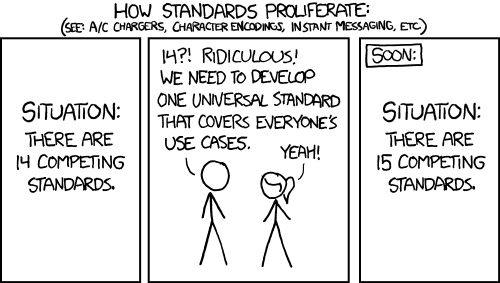
While Republicans and Democrats have been fighting for decades over the size of government, political scientist Steven Teles argued recently that the best question isn’t how big, but how complex government should be. He calls the American answer to this question kludgeocracy: a system characterized by the “clumsy but temporarily effective solution,” with little sense of overall order or coordination.

While the term comes from software development, kludges have been around for a long time. Kludges are the modus operandi of evolution, which has no mechanism to plan for the long term–ad hoc solutions are piled on top of each other at every step. For every elegant symbiotic relationship, there’s a condition like diabetes (which may have helped northern peoples withstand cold during the last Ice Age) or sickle cell disease (which conferred resistance to malaria in sub-tropical zones). These conditions are useful for surviving a crisis but raise all sorts of problems in the long term.

In government, kludges arise from similar crises. Federalism and the ideal of a small, constrained national government were ideological and legal tools that let the economically and culturally divided post-Revolution American colonies form a united government. This was an excellent strategy for a nascent nation in which building a strong democratic government right away was politically impossible. Today, however, these constraints don’t limit government action so much as complicate it. Teles writes:

“American institutions do, in fact, serve to constrain the most direct forms of government taxing and spending. But having done so, they do not dry up popular or special interest demands for government action, nor do they eliminate the desire of politicians to claim credit for new government activity. Public demand, when prevented from flowing directly, does not disappear. Instead, it spreads out in complicated, unpredictable ways.”


A common example of this kind of complication is the proliferation of overlapping federal, state, regional, and local government agencies with shared responsibility for particular outcomes. In my field of transportation planning, infrastructure projects are often a shared effort of the federal Department of Transportation, state DoTs, regional planning and transportation authorities (like New York’s MTA), and local governments–all aided, in the background, by countless consultants who profit from helping understaffed agencies navigate the complexity. Even with plans in place, successfully funding a major project requires that politicians from city counselors and mayors to governors and senators work together to raise different cash streams, including federal appropriations and local tax levies.

Again, it’s worth asking how we got here. A large piece of the answer is that in politics, it’s often easier to create a program than to destroy or merge existing ones. Existing programs have constituents and beneficiaries. When a problem emerges that the existing policy regime can’t solve, it’s (relatively) easy to add a department or committee to solve that problem, but harder to make it strong enough to replace old ones or streamline the process.

Randall Munroe, xkcd

Teles is skeptical that kludgeocracy can be changed anytime soon; from an evolutionary perspective, we might say that selection pressures aren’t yet strong enough to force a pruning of government complexity. (But perhaps being compared unfavorably to root canals will spark some change.) In the meantime, though, he suggests that improvements can be found around the margins–and “in any case knowing what one would do to reverse the problem is necessary if only to know how to keep it from getting any worse.” At the local level his principles suggest a few important changes:

  • Building in-house capacity rather than outsourcing to consultants who, in the long term, benefit from inelegant solutions
  • Creating ‘one-stop shops’ for permitting and compliance that reduce the number of hoops citizens and businesses must jump through
  • Making the complexity of bad policies more obvious to the public–such as by measuring and publishing compliance costs–instead of hiding it, in order to build political pressure for better approaches

While Congress exemplifies kludgeocracy, the American electorate seems to be catching on. Outside American national politics, though, the idea can add a lot to policy debates and help us diagnose real or potential failures. Liberals and conservatives alike can find common ground in the idea that, no matter the size of our government, we’re all better served when it’s transparent, comprehensible, and effective.

The Virtue of Selfishness for Robots

One of the biggest selling points for self-driving vehicles is safety–after all, robots don’t get drunk, make phone calls, and do their makeup at 70 miles an hour. But what happens when things go wrong? Via Tyler Cowen at Marginal Revolution, the New Yorker recently examined that question:

Your car is speeding along a bridge at fifty miles per hour when errant school bus carrying forty innocent children crosses its path. Should your car swerve, possibly risking the life of its owner (you), in order to save the children, or keep going, putting all forty kids at risk? If the decision must be made in milliseconds, the computer will have to make the call.

Cowen and others point to at least three possible models of machine ethics: a personal choice model, a market for risk, or a regulatory mandate.

http://www.treehugger.com/cars/googles-self-driving-car-reaches-300000-miles-without-accident.html
Google driverless SUV (Treehugger)

A personal choice model would allow drivers to select how to allocate risks between themselves and others. An altruist might weight their own risks as less important than that of others–that is, they’d prefer to swerve off the bridge than hit even one other person. Conversely, a completely self-interested user would choose to protect themselves at all costs, even if it means sending a bus full of kids careening into the river. As a middle ground, a user might decide on a moderate rule, perhaps prioritizing the safety of people in their vehicle over that of an equal number of people in another car, but accepting risk when more ‘outside’ lives are at stake.

We might prefer this model for allowing people freedom to pursue whatever norms they feel comfortable with, but a utilitarian might object and note that permitting selfish behavior may have negative externalities–that is, it not only shifts risk to others, but also increases overall risk–so we might all be safer if we collectively agreed to give our cars altruistic ethics. While this logic can be hard to swallow when it’s your life at risk, the argument suggests that we should at least consider some other options.

What if we let people choose how much risk to bear but require that the selfish compensate the altruists, perhaps through higher insurance premiums? Different people have different levels of tolerance for risk, and those who value their safety more should be willing to pay people who are more caviler about death by fiery auto crash for the privilege of acting selfishly when disaster strikes. Cowen paints an amusing picture of this kind of market: “And over here, at a price discount, is the Peter Singer Utilitarian Model. The Roark costs $800 more.”

This seems like a sensible way to allocate risk: everyone still gets to choose how much to protect themselves vs. others, but those who impose more risk also compensate those who pose less. But, of course, there’s an objection: “What about people who can’t afford to pay the premium? Why should the poor be forced to take greater risks, while the rich can easily afford to choose the ‘selfish’ car?” This is something of a contingent argument, as its significance depends on the price of the ‘selfishness premium’, but if it were the case that avoiding the riskiest policy was out of reach for many drivers, regardless of their risk tolerance, we might take this criticism as a serious problem.

The conventional liberal answer to this sort of situation is “Regulate it!” We could simply to require that all vehicles be sold with programming to maximize everyone’s safety–in the bridge case, the car won’t hesitate to swerve off towards certain death for its occupants if it saves more lives in total. From an aggregate perspective this is good, but isn’t there something chilling about knowing your car will turn on you and send you to your death for the greater good?

https://i0.wp.com/blogs.reuters.com/wp-content/uploads/2006/04/stunt300.jpg
And it probably won’t even look this cool. (Reuters)

It seems as if we’re left with a difficult trilemma between freedom, market values, and the social good–each of these leaves something to be desired. However, there’s another way to judge these options, as David Levinson points out:

Determining the strategy for self-preservation will inevitably be easier than determining the strategy for what others are doing, as the others (a crowd of people, other cars) is much less predictable. If everyone assume the other will do self-preservation, that is more stable than me trying to predict what you will do to avoid hitting me while you try to predict what I will do, ad infinitum.

Our trilemma, it turns out, hinges on the idea that different ethical rules are equally easy to follow. However, taking action in a life-and-death situation has to happen very quickly, more complicated models mean slow response times, and slower responses mean more accidents! In particular, a model that has to guess or process different kinds of behaviors from different vehicles will be much more complicated than one with a uniform model of what others will do. To Levinson, this points towards an ethic of self-preservation, but perhaps the more important point is that on safety, standardized, predictable responses will trump individual choice every time. This means that once a standard is set, risks will be lowest if all users follow it–so it seems likely that whatever system enters the market on a broad scale first will become locked in.

While this consideration simplifies the problem in some ways, this doesn’t mean that ethicists can call it a day just yet. Different models of selfishness vs. altruism might still be possible within the constraint of limits on processing consequences, and, crucially, our ability to choose the ethical frameworks of the machines around us may be difficult and costly to change. It’s important to get it right the first time, and to do so in a way that considers both the best ethical framework and the dangers of implementing it. If ethicists want a say in who’s lives matter to our vehicles, the time to start is now, and the place to start is with the engineers.

Renovating Renting

Over at The Atlantic Cities, Emily Badger writes on the plight of that most vulnerable of demographics: professional singles and couples torn between the mobility of renting and the security of homeownership.

The smallest rental units in Canada–‘micro-lofts’ in the Burns Block in Gastown

“The Anxiety of the Forever Renter,” she reflects, isn’t a matter of economic insecurity (perhaps because that’s already a given)–after all, the housing crisis is just an exclamation point on the broader historical finding that residential real estate isn’t a winning investment. What troubles her are the quotidian woes and indignities of sharing the rights to one’s home with a landlord:

There’s something fundamentally demeaning about being a renter, about having to ask permission to change the showerhead, about having to mentally deduct future losses from deposit checks for each nail hammered into the wall to hang family photos.

and

More recently, my husband called our property manager to announce a long-awaited addition to our household that we thought would be welcome.

“I just got a job,” he told her, literally on the day that he had just gotten a job. “And my wife said when I get a job, I can have a dog. So I’m calling to tell you I’m getting a dog.”

As it turns out, we will not be getting a dog.

Having adopted a Thatcheresque aspiration in this vein–“A man who, beyond the age of 26, finds himself without a dog can count himself as a failure”–the extent to which renting forecloses certain lifestyles poses some tough choices. I wonder, though, how much anxiety over the rise in middle-class people renting past their 20s and early 30s is inherent to the market relationship of renter to landlord or the unwritten social contract between tenants and neighbors, and how much is simply a hangover of the norms we’ve adopted after three generations of an “ownership society.” For example, we tend to treat the indignities of getting the landlord’s okay to build a window flower box as a hardship of the powerless, while being scolded by the neighborhood association is the burden of the well-to-do.

Part of this problem is that, globe-trotting knowledge workers notwithstanding, renting households remain are more likely to be single-earner, low-income, and low-wealth. I can empathize with Badger’s desire to have her cake and eat it too, but her vision of “some system that decouples ‘renter’ status from income class” follows from the kind of thinking that turned the inconveniences of renting into a special affliction of the young and marginalized in the first place. As a new demographic of older and wealthier renters emerges, a strategy that emphasizes their uniqueness and tries to opt out of the system is probably the worst possible outcome.

Instead, I hope to see a movement that empowers renters across the income spectrum. Insofar as upper-middle-class professionals feel oppressed by their scumbag landlords, let me suggest that they band together with their neighbors, across the hall and across town, and put their influence and energy into demanding better treatment and accountability from their landlords. Tenants unions, such as the 59 member organizations of the International Union of Tenants, provide a good starting point for this kind of activism. Tenants organizations have helped promote regulations that prevent abusive practices–for example, laws requiring that landlords provide photographic evidence of damage in order to withhold a former tenant’s security deposit.

Housing the hyper-mobile professional workforce of tomorrow is a serious challenge, and engaging them in local activism won’t be easy. But homeowners and homebuilders were able to carve out a set of tremendously favorable policies for themselves 60 years ago. If tenants can organize themselves into a real constituency, perhaps they can re-balance the playing field for those who rent by choice–and maybe give a little power to the many renters who don’t.

Driver Monitoring via Mobile App

Via The Transportationist: New Mobile Life Guard app monitors driving behavior and issues verbal alerts

The app, under development by Ram Dantu at the University of North Texas, uses the phone’s sensor suite to detect both driving conditions and driver errors. If a driver using the app makes a mistake,

The app then issues a verbal alert, such as “Sudden accelerate”; “Hard braking”; “vehicle wandering detected”; “tailgating detected”; “lane hopping detected”; “bad right (or left) lane change”; or “left (or right) swerve detected”, among other things. It also will warn you not to talk or text.

While early testing is being sponsored by insurers as a way to reward safe drivers, I wonder if the outcome on the horizon is using large datasets of driving records as a much better indicator of risk than claims and collisions. This would be especially valuable among young drivers, who insurers have little information about and must treaty as inherently risky. While smartphone data couldn’t capture all aspects of driver safety (checking your mirrors before changing lanes, for example) it could help suss out risk much earlier in a person’s driving career. Needless to say, it could also provide valuable forensic data for correctly distributing blame from collisions where he-said-she-said testimony would otherwise be all judges or insurance investigators have to go on.

While it’s easy to envision this app being used punitively, it might also be valuable for improving skills and coaching new drivers. In the United States, instruction all takes place when a new driver is first starting out, perhaps in just a few behind-the-wheel sessions. Licensing is a done deal once a driver passes their road test, and a driver might not have a reason to get instruction or coaching on better driving for four or five decades, when insurance companies begin to give discounts for senior refresher classes. A licensing system that requires new drivers to take annual or semi-annual coaching sessions, aimed at improving skills or maneuvers that app data indicates are the driver’s weaknesses or greatest risk factors. If the app records an older driver’s skills deteriorating in a particular area, an insurer could also prompt the driver with an incentive to take a coaching session on improving that skill.

These interventions will inevitably be seen as intrusive, but the fact is that people are terrible judges of their own driving skills. Since the 1980s, a series of studies have consistently found an optimism bias in drivers’ evaluations of their own ability. Clearly, most of us could use a dose of humility when it comes to our skills behind the wheel.

Sooner or later–probably sooner than many of us think!–autonomous vehicles will begin to disrupt our standards of safe driving; Google’s driverless fleet has driven over 300,000 miles accident free, and autonomous vehicles have the potential not just to match but to greatly exceed human safety records. As we navigate the transition between human and automated driving, I expect that insurers and society will raise the bar on acceptably risky driving, and monitoring systems like this one will play a role in allocating and pricing the risks we all impose on each other when we drive.

Bloomberg on Nudging and Leadership

An excellent interview with New York Mayor Michael Bloomberg is in The Atlantic (hat tip to Lee Haber at SCARP for sharing!) today, with some interesting thoughts on American and urban politics throughout. For me, the best bit of the interview was his explanation of his thinking behind the much-discussed soda ban:

“I think it’s government’s job not to ban things but to give you information and let you make the decision. So calorie counts would do that. Portion control is a graphical or physical way of giving you information in terms of how much sugar you’re consuming.”

The ban, which prohibits New York restaurants from selling soft drinks in sizes over 16 ounces, has received significant criticism over its perceived paternalism and the strict nature of the ban. However, Bloomberg (I think correctly) frames the policy differently–not as a restriction on how much soda a customer can buy or drink, but a salient way to convey information about a reasonable threshold of health.

“All we’re saying is that restaurants and theaters can’t use cups greater than 16 ounces. So if you want to buy 32 ounces, you can buy 32 ounces, you just got to carry it back to your seat, or your table, in two cups.”

Why should the amount of soda in your cup matter anyway? If you liked the jumbo size, a free-marketeer might argue, you’ll just get two (or three, or four!) sodas, and all we get for our efforts is some extra trash!

While Bloomberg doesn’t cite the research that underlies this policy, a growing body of research shows that portion sizes strongly influence the amount of food people will consume. In a famous example, groups of subjects were served soup, either conventionally or from bowls that imperceptibly refilled themselves from a vat under the table over time! Researchers measured how much the subjects had eaten: those whose bowls refilled themselves ate significantly more than the control group, but gave similar estimates of how much they’d eaten and how full they were. Essentially, the subjects relied not on their own appetites or dietary goals but on visual cues and simple heuristics, like “finish the portion in front of you.”

Brian Wansink, the author of the study, suggests that most people aren’t very good at estimating volumes of food and drink that they consume, and that portion sizes provide cues that can bias the amount we eat or drink. And without regulation, Bloomberg notes, consumption cues are being decided to maximize profits, not health:

“But to say to the public — the public says “I have a right to have my bottle of soda in any size I want” — no! You only have the right to buy soda in the size of the bottle that the manufacturer decides it is in his or her interest to sell.”

Bloomberg’s regulation, while appearing heavy-handed, is actually a great example of choice architecture–it preserve’s people’s freedom to consume what they want, while providing a handy cue towards what we might call an ‘optimal’ level of consumption. (One caveat is that consumer might end up paying more for two 16oz sodas than they would for one 32oz drink, in which case the regulation is a bit more of a shove than a nudge.)

As a last bit of wisdom on the subject: when the interviewer brought up popular opposition to the move, Bloomberg was unswayed, and in fact quite dismissive of the notion (here, anyway) that policy nuance should be subject to a public opinion veto:

“Leadership is about doing what you think is right and then building a constituency behind it. It is not doing a poll and following from the back…

[That’s not] good business or politics, because people aren’t good at describing what is in their own interest. If you say to somebody, “How many times do you turn the page?” and then go and stand on the other side of the room where they don’t notice you, and count, you will get a very different number from what they said they did. That’s true with everything. And — the obligation — what leaders should do is make decisions as to what they think is in the public interest based on the best advice that they can get, and then try and build a constituency and bring it along.”

The full interview, including great discussion of issues from restaurant licensing to bike lanes to Occupy, is here.

The Planner as Choice Architect

Part One of a series: “Why should planners care about behavioral economics?”

What are planners good for?

Within the profession, we can think of a lot of things we do and hats we wear: we’re writers. Designers. Analysts. We make maps and charts and videos. We manage people and projects. Sometimes we’re salespeople, trying to reassure the public or get a winning project bid.

Some of these roles are fun. Many are important. But none of them are at the core of what planners do–in fact, most of us aren’t especially good at most of them! Architects and LArchs are often stronger designers, and engineers and economists more sophisticated analysts and modelers. While we may know our way around Photoshop, we’re not professional artists, and try as we might to convince the public of our infinite wisdom, we’re not professional liars–er, politicians.

So what’s our niche?

One standard planning answer goes something like this: we have a mix of creative and analytical skills, but our real strength is bringing different perspectives and interests together to think farther into the future than other groups do. This, too, is an important part of our job, and it’s an ideal that (I think) attracted lots of us to the profession. But I don’t think it’s unique. Authors, journalists, academics of all stripes, technologists, and politicians are all in the market of selling us interesting visions of the future of the city and of urban life. And while these voices are often criticized for fixating on big, hypothetical game-changers, planners often ignore those changes entirely, planning decades into the future while assuming that current trends will stabilize to a status quo or some ‘new normal’.

I would like to suggest that we have a different role, one that’s meaningful, powerful, and unique in our context. It’s a role that we’re already performing, but that we’re only beginning to study explicitly. That role is choice architect.

In their 2008 book Nudge, Richard Thaler and Cass Sunstein describe the manager–let’s call her Ellen–of a public school system’s cafeterias who learns that students walking through the lunch line tend to take more of whatever foods are at eye level. Put cookies and pizza in that space? Kids eat more of it. Replace them with salad and whole grains? Kids eat more of them too. Nothing about the options in front of the students changed–they could still get their pizza and cookies, and they weren’t paying anything more for them. In economic terms, their incentives were exactly the same!

Ellen has a couple options: should she leave the items the way they were, or perhaps place them randomly to make the children’s choices ‘fair’? Or should she use this information to help kids choose healthier foods? Thaler and Sunstein call Ellen a choice architect: she has the ability to frame the decision that her students make in order to promote a particular set of goals, without restricting their freedom to ultimately make their own choice.

Like the cafeteria manager, planners often find themselves with the job of putting options in front of people–whether it’s our colleagues, the public, or the politicians and officials who ultimately get to choose what gets implemented. More often than not, our research is for someone else’s benefit, not our own, and we often view our responsibility as simply providing accurate information to that decision-maker. But as planners, we’re not just serving up information–we also get to choose, metaphorically, what to put at eye level!

The more we know about how people, both as individuals and groups, process information and make decisions, the better equipped we are to ensure that those decisions are good ones. Of course, this immediately raises the question of who gets to decide what a good decision is. As choice architects, our goal shouldn’t be to impose a particular outcome–doing that is a good way to get fired, and we’re not likely to be very effective at it anyway. What we can and should do is exactly what Thaler and Sunstein advocate: “influence choices in a way that will make choosers better off, as judged by themselves.” Our goal shouldn’t be to trick people into choices they’ll resent, but the opposite: to help them avoid regrets and make decisions they’ll be able to judge as the right call in the future.

Visioning, facilitation, and structured decision making techniques are all good first steps towards this that we can use today, but I believe behavioral economics has many more lessons for how planners can put good choices at eye level–or at least move obviously bad choices a little farther away. In future posts, I’ll be unpacking some of the key lessons on why people (including you and me!) process information and decide poorly, what interventions can help them (us!) do better, and some ideas about how planners can use this information.

Hello!

Welcome to The Behavioral Urbanist, my first foray into the blogosphere! I’ll be writing here, hopefully at least weekly, about topics in the intersection between behavioral science and urban systems. As a student of urban planning, I pair a passion for the challenges and complexity of modern cities with inspiration from behavioral economics, happiness research, and political psychology.

Who am I? I’m Tim Baird. I’m a Master’s student at the University of British Columbia studying urban planning, with a focus on transportation. I’m currently conducting research on the relationship between commuting, well-being, and active transportation.